Belt Conveyors
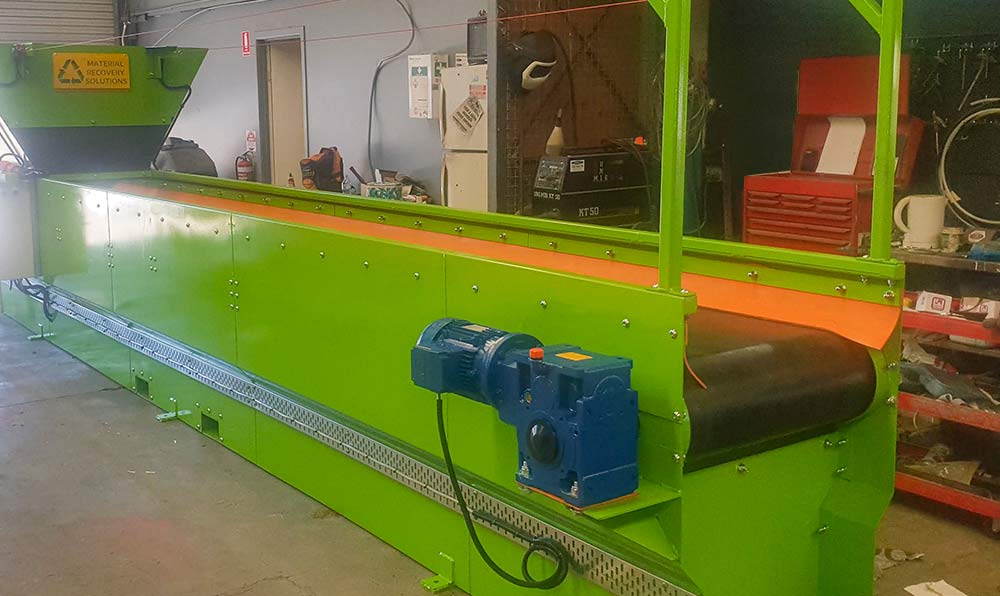
MRS Conveyor Belt
MRS Conveyor Belt systems are built to carry a wide range of products, whatever the shape or size, which makes them a solid fit for businesses running diverse product lines. Reliability and performance are the whole point, they’re designed to keep running with minimal downtime.
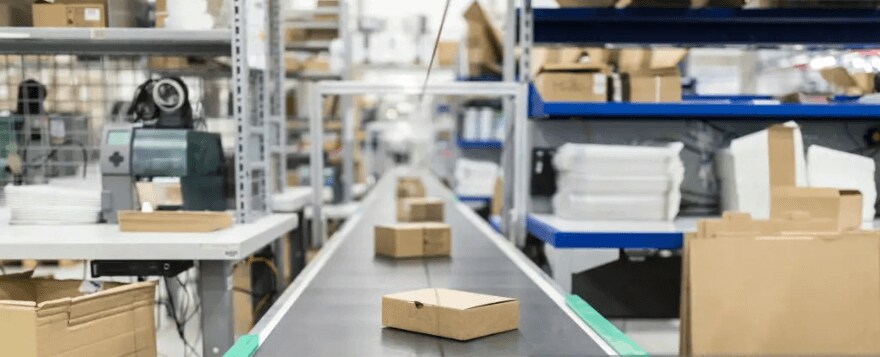
They play a role across manufacturing, warehousing and large-volume distribution. On a production line they keep materials moving without gaps, cutting down on manual handling and the mistakes that come with it. In a warehouse they speed up storage, retrieval and order fulfilment while reducing damage from things being carried by hand.
What is a belt conveyor?
A belt conveyor moves material along a continuous loop of belting, usually rubber, fabric or PVC, driven by a motor at one end. It’s the more common and generally more affordable option compared to a chain conveyor, better suited to lighter, more consistent loads that need gentle, steady handling.
How does it work?
A drive pulley turns the belt in a loop, with material sitting on top and moving with it from one end to the other. Depending on your site, the belt can run flat, on an incline or decline, or curve to fit around obstacles. Speed, width and configuration all come down to what you’re moving and how your site’s laid out, that’s something our team works through with you rather than a fixed spec.
Types of belt conveyors
Not every job needs the same setup:
- Flat belt: the standard option for general material handling on level ground
- Incline and decline: moves material up or down between processing stages or floor levels
- Curved: follows a bend in your layout instead of forcing a straight run
- Roller bed: supports the belt on rollers rather than a flat bed, better for heavier or bulkier loads
- Modular: built from interlocking sections, easier to clean and repair section by section
Not sure which fits your process? Get in touch and we’ll talk through your material and site.

Why choose one?
- Efficiency: keeps materials flowing continuously instead of relying on manual carrying
- Accuracy: less handling means fewer errors and less product damage
- Lower labour costs: fewer workers needed to move materials manually
- Safety: cuts down on the lifting and repetitive motion that lead to workplace injuries, worth a read if you want the wider picture on manual handling risk in Australian workplaces
- Versatility: useful well beyond manufacturing and warehousing, distribution centres and material recovery facilities handling high volumes all lean on these systems too
Things to weigh up
A belt conveyor isn’t always the right call:
- Heavy or abrasive material: tough loads wear through a belt faster than they would a chain system, a chain conveyor holds up better here
- Exposed moving parts: belts need proper guarding around pulleys and drive points to stay safe on site
- Belt wear and tracking: belts need regular checks to stay aligned and in good condition, which is why ongoing servicing matters
If you’re not sure whether belt or chain suits your site better, talk to our team and we’ll help you figure it out.
Custom builds and configuration
We build both fixed and mobile systems, tailored to your specifications rather than off the shelf. That covers straight-line, incline, decline and curved layouts, in whatever length, width and height your site needs, plus manual or fully automated setups.
Design, drive position, belt speed and emergency stopping points are all configured around how your site actually operates, so the system fits into your existing setup rather than the other way around. Get in touch and we’ll talk through what you need.
In addition to belt conveyors, Material Recovery Solutions also builds chain conveyors for heavier material handling needs. And if sustainability’s part of your decision, here’s how conveyors support zero-waste goals in Australia.
What to think about before you buy
The right setup depends on a handful of factors, not just budget:
- Material type: light paper and cardboard need a different setup than heavy timber or scrap metal
- Volume: higher throughput usually means wider belts or a stronger build
- Space: tight layouts might need angled runs or a more compact design
- Speed: needs to match whatever machine it’s feeding, too fast or too slow both cause problems downstream
- Safety features: guarding and emergency stops need to be built in from the start, not bolted on after
We work through all of this with you before anything gets built, so the system fits your site rather than the other way around.
Is it worth the investment?
Upfront cost is only part of the picture. A well-designed conveyor system earns that cost back through:
- Less downtime
- Lower labour costs
- Higher throughput
- A safer site
- Equipment that lasts
Over time, that adds up to more than the sticker price ever suggested.
Works with your shredders and balers
A conveyor rarely runs on its own. Feed it into a shredder or baler at the right pace and the whole line moves better, less jamming, more consistent output, fewer stoppages. Read more about integrating conveyors with shredders and balers.
FAQ
What is a belt conveyor used for?
Moving materials and products continuously along a fixed path. It’s used across manufacturing, warehousing, recycling and distribution to cut down on manual handling and speed up throughput.
How do belt conveyors work?
A motor-driven pulley moves a continuous belt loop, with material carried on top from one end to the other. It can run flat, inclined, declined or curved depending on your layout.
What are the different types of belt conveyors?
Flat, incline/decline, curved, roller bed and modular are the main types, each suited to different materials and site layouts. We can help you work out which fits your process.
What is the difference between a belt conveyor and a chain conveyor?
Belt conveyors suit lighter, more consistent material flow. Chain conveyors handle heavier, tougher loads in rougher environments. A lot of sites run both.
What are the downsides of a belt conveyor?
Belts wear faster than chain systems under heavy or abrasive loads, need regular tracking checks, and require proper guarding around moving parts. For very heavy material, a chain conveyor is often the better fit.
Can a belt conveyor be custom built for my site?
Yes. We design around your material, throughput and site layout, including length, width, height and drive configuration.
Do you offer mobile as well as fixed belt conveyor systems?
Yes, both fixed and mobile setups are available depending on what your site needs.
Do you install and service belt conveyors across Australia and New Zealand?
Yes, installation, training and ongoing servicing and breakdown support nationwide and across New Zealand.
Contact Us
Our knowledgeable staff is here to help you find the right solution for your business's specific needs. Call us now or use this form to contact us.
26 Blue Rock Drive
Luscombe, QLD 4207